
Heathkit IT-1 Isolation Transformer Meter Repair
A vintage isolation transformer whose panel meter had quit, and an afternoon spent fitting a replacement.
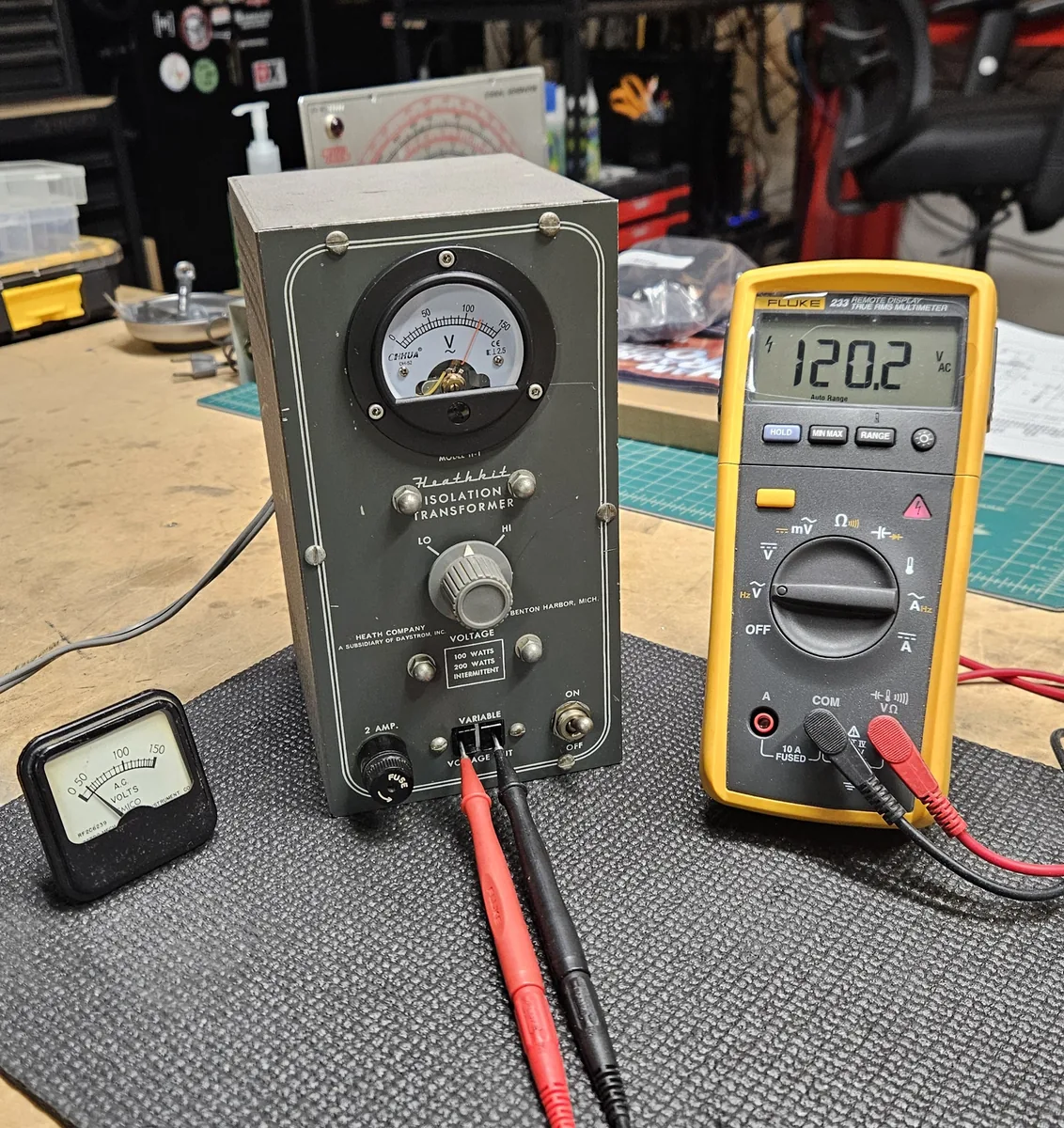
I spent a bit of an afternoon in December 2025 replacing the voltage meter on an older Heathkit IT-1 Isolation Transformer with variable AC voltage. An isolation transformer separates the equipment on the bench from the wiring of the wall outlet, which makes it safer to work on old radios and test gear. This one also has a knob to raise or lower the output voltage, and a meter on the front to show what it is set to. Heathkit produced the IT-1 between 1953 and 1960.
1. A meter that always pegs
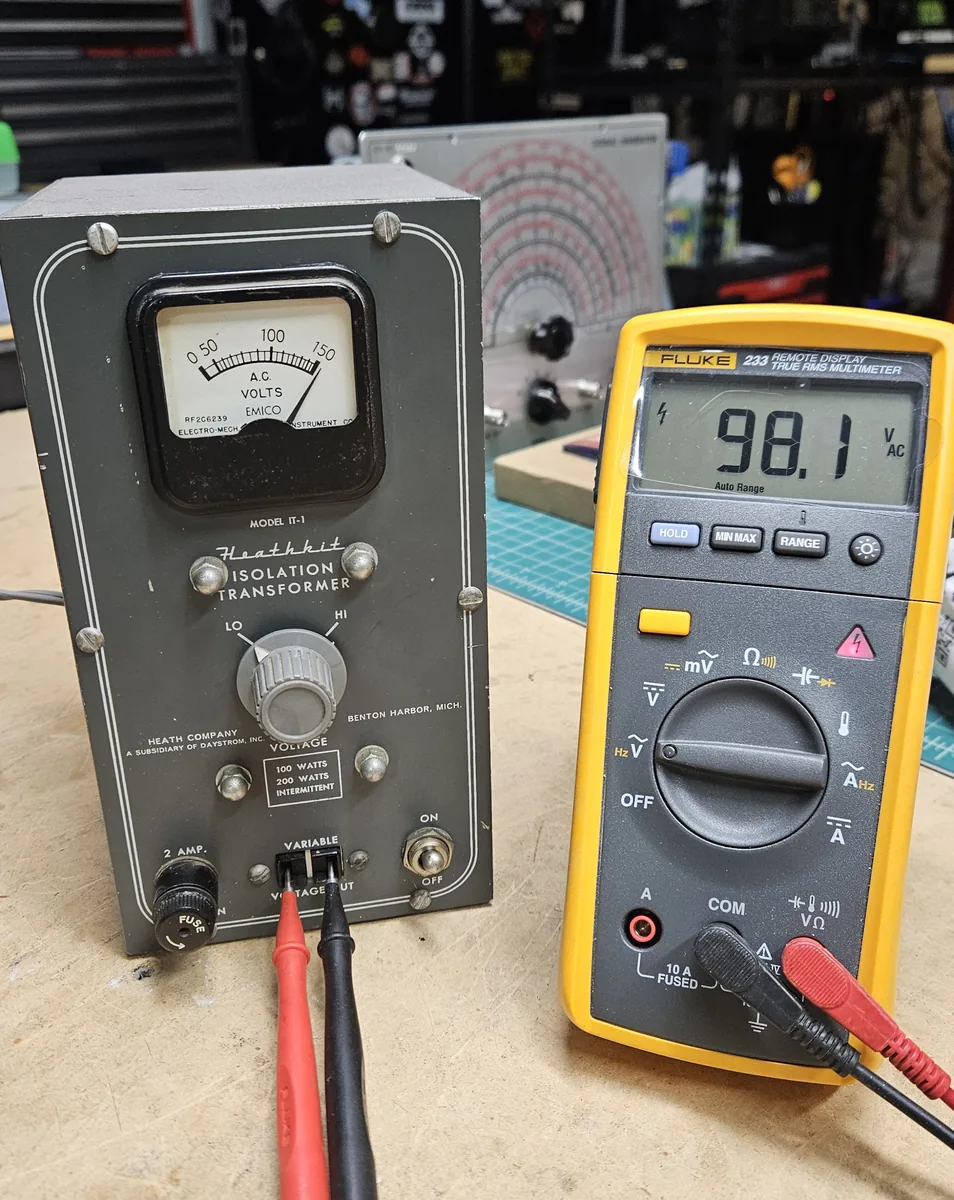
The meter had stopped responding. Whatever the output was, the needle would always peg to the right. In the first photo the actual output is 98.1 volts AC on the Fluke, but the old panel meter reads more than 150 volts.
2. Inside the old meter
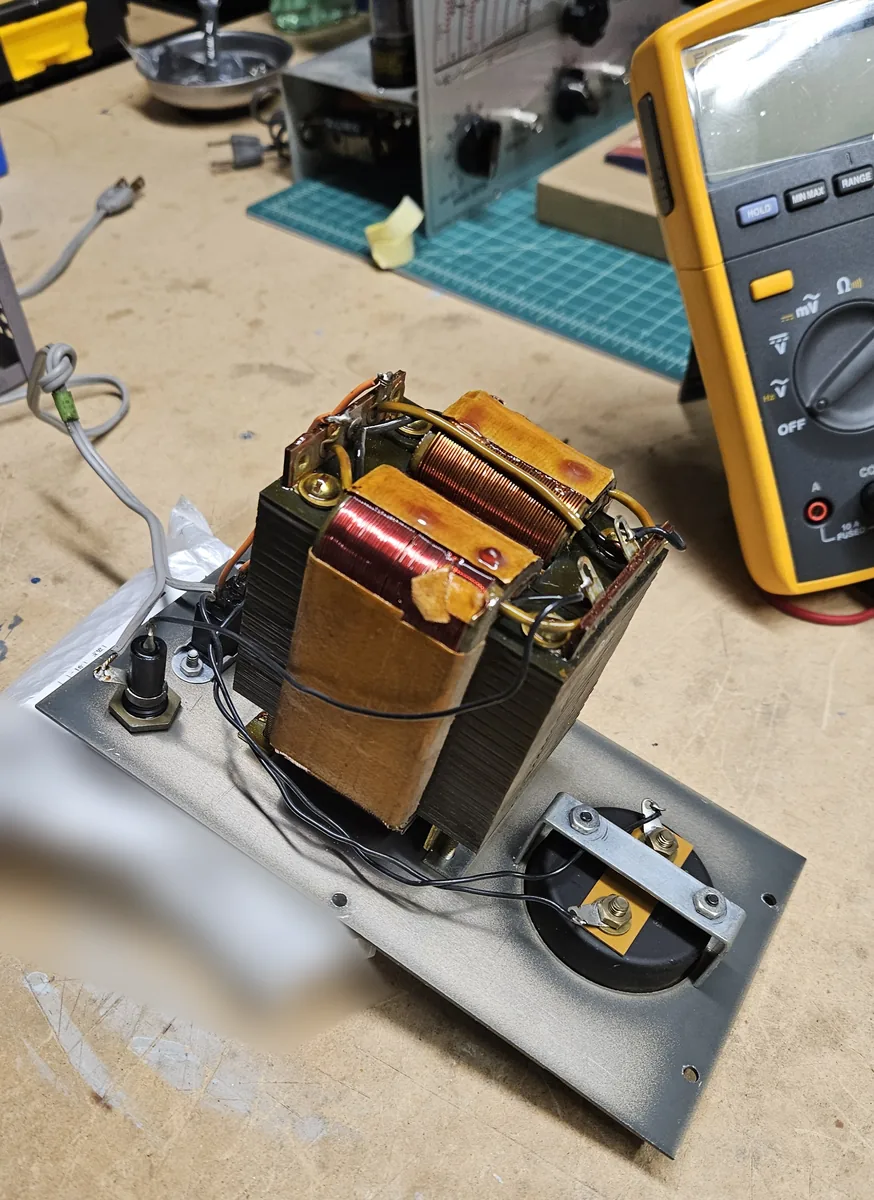
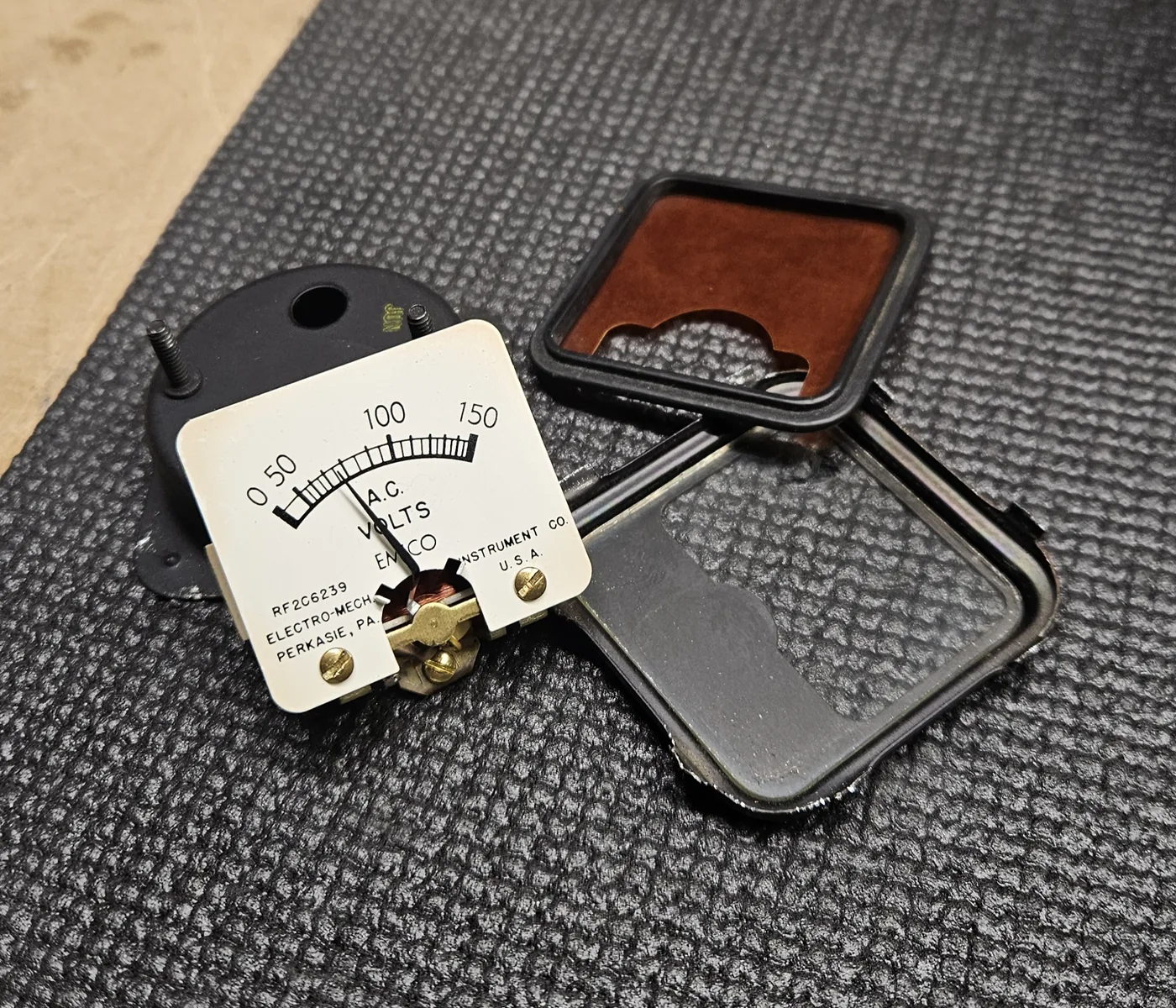
This type of meter doesn't have any mechanical adjustment points. It is calibrated with an array of resistors. I tried a few different resistor values without luck: the needle still pegged right.
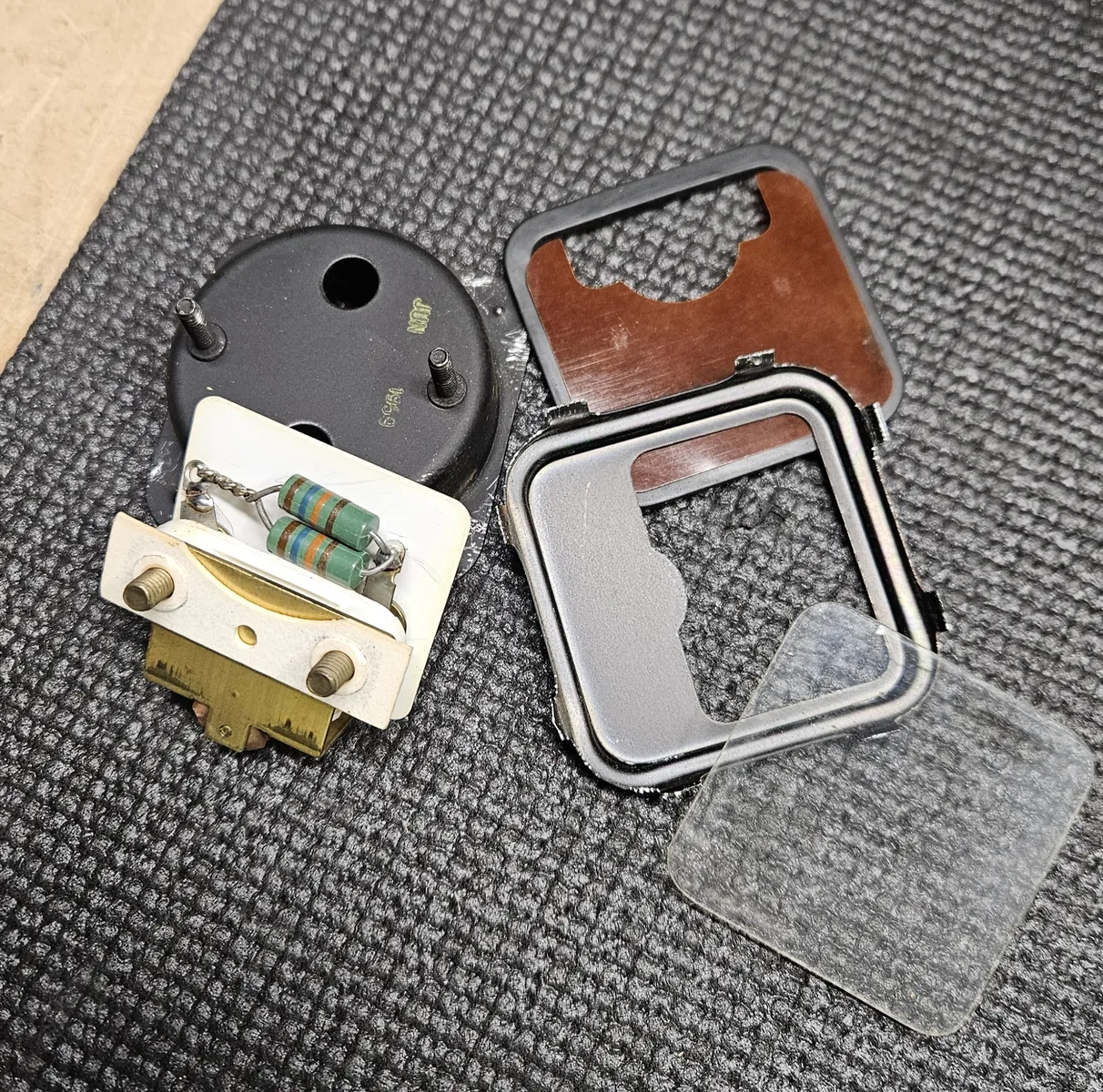
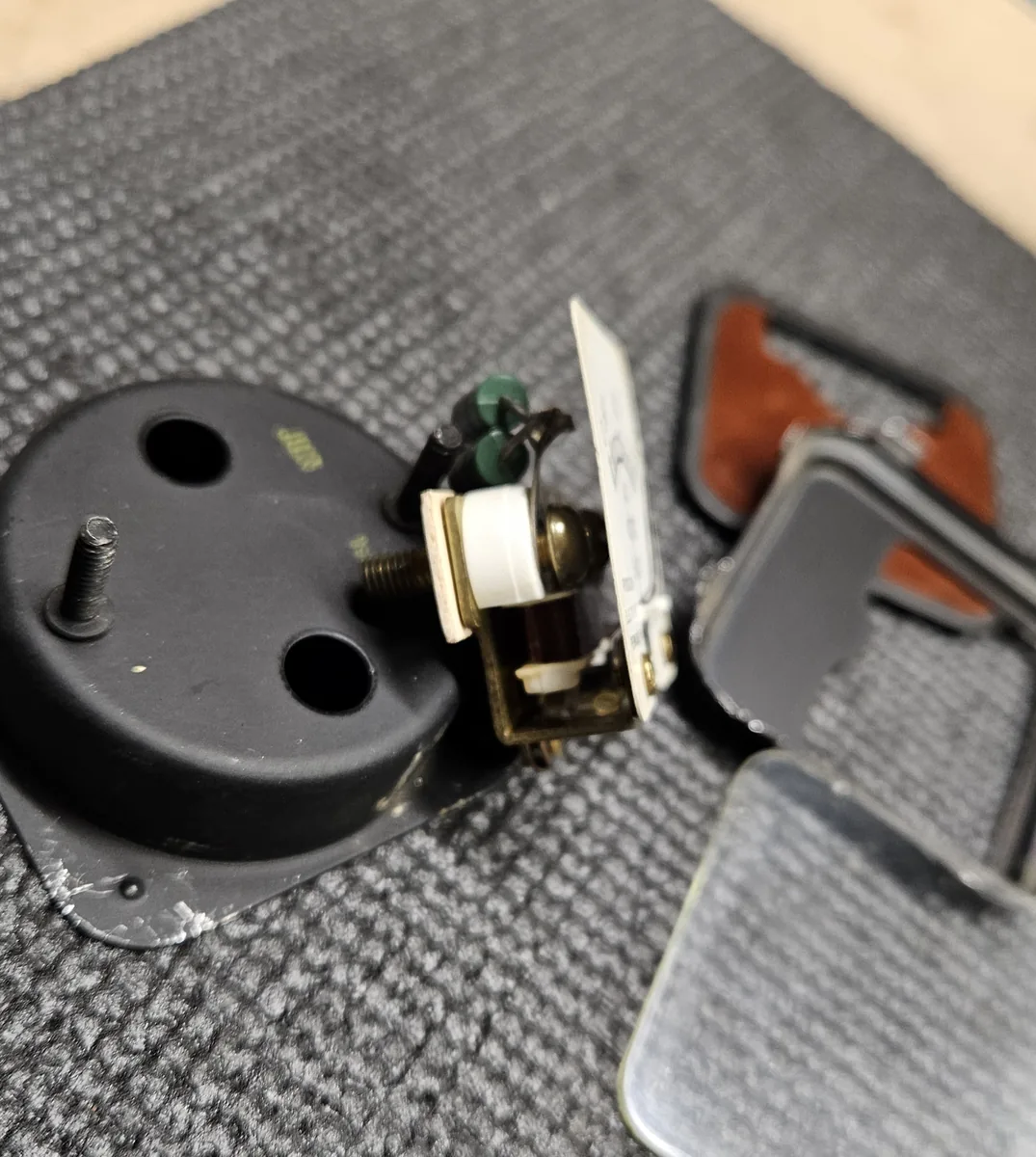
3. A replacement that fits the hole
I found a suitable replacement meter online that would fit the cutout. It mounts differently, though, so I had to drill some holes around the opening to mount it.
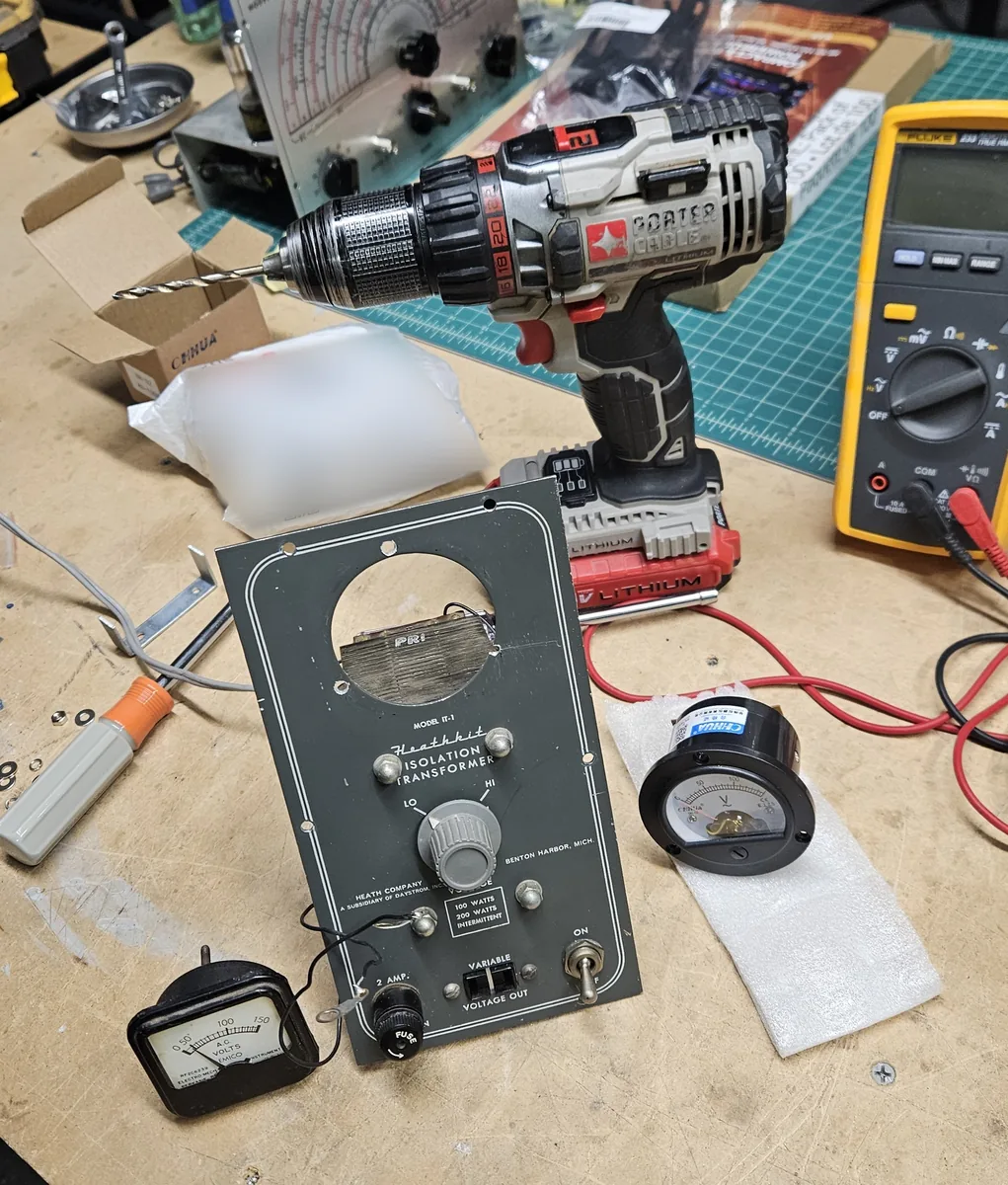
4. Tested and working
With the new meter mounted, I tested it against the Fluke. Both show 120 volts AC: the analog panel meter and the digital multimeter agree.
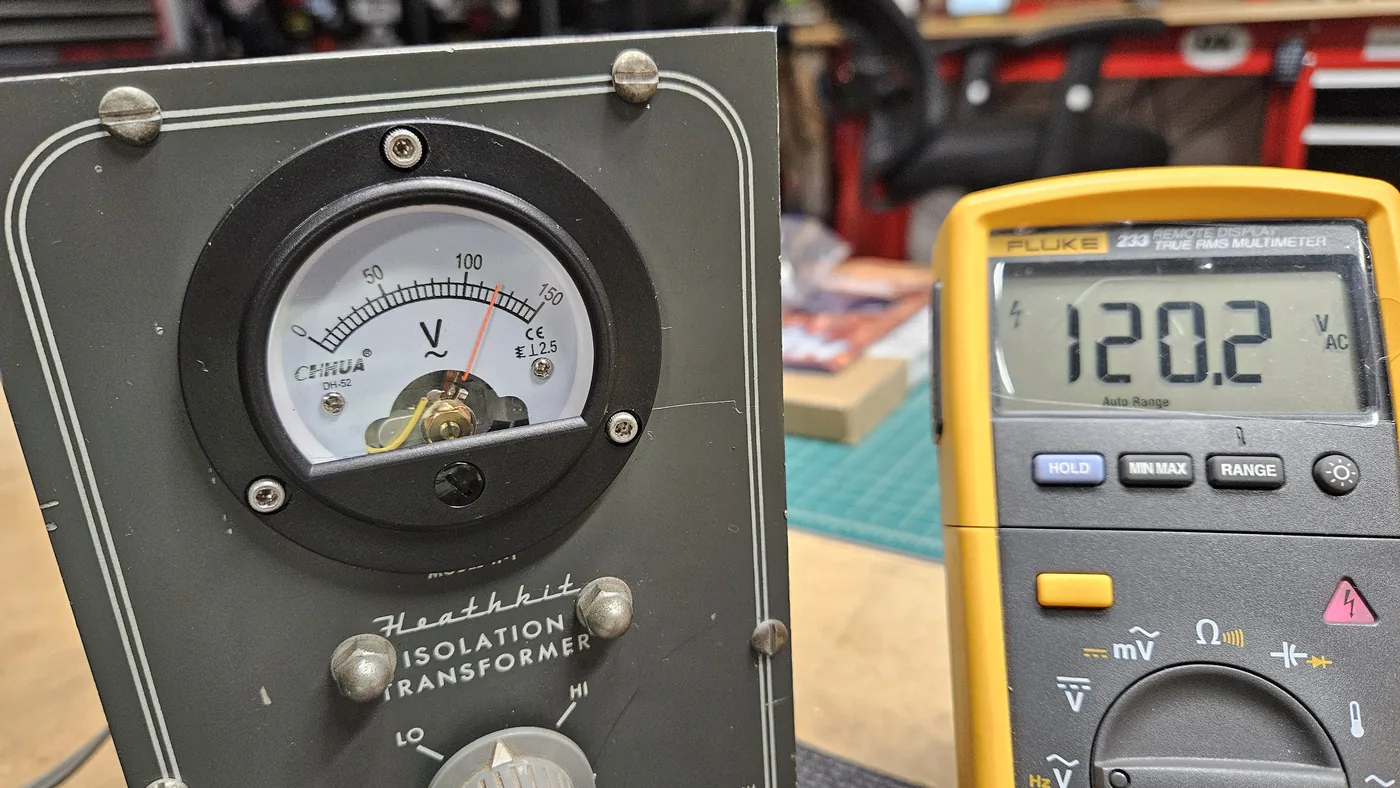
About the IT-1
Heathkit introduced the IT-1 as a kit in 1953 and produced it through 1960. In the 1956 catalog it sold for $16.50. It is small, about 8 inches high, 4¼ inches wide and 4¾ inches deep, so it takes up very little room on the workbench. The Voltage knob adjusts the output between about 90 and 130 volts AC, and a 2 amp slow-blow fuse protects it.
To keep the price down, Heath used an inexpensive meter with no damping. Its scale is stretched out so that the useful range, 90 to 130 volts, is easy to read. You can see that on my old meter's dial, where 0 and 50 sit right next to each other. The replacement meter has an ordinary, evenly spaced scale.
What an isolation transformer like this is good for:
- Working more safely on old AC/DC sets, such as the five-tube AM radios once found in most homes, where the metal chassis can be connected straight to the power line
- Plugging in newly acquired or newly built equipment for the first time
- Tracking down problems that only show up when the line voltage is low or high
- A safe, adjustable source for checking AC voltmeters
The history and specifications here come from Heathkit of the Month #18: the IT-1 AC Isolation Transformer (PDF) by Bob Eckweiler, AF6C, first published in the November 2009 issue of RF, the newsletter of the Orange County Amateur Radio Club (W6ZE). It also explains in detail why an isolation transformer makes bench work safer.
Parts
- Heathkit Model IT-1 isolation transformer, rated 100 watts (200 watts intermittent)
- Original meter: EMICO 0–150 V AC panel meter (Electro-Mechanical Instrument Co.)
- Replacement: CHHUA DH-52 round 0–150 V AC panel meter
- Tools: a drill for the new mounting holes and a Fluke 233 multimeter to check the result