Hi, I'm Gene
N7WDZ · General class · Las Vegas, Nevada · Grid DM26 · Formerly KC2WDZ
I was born and raised in the New York City area and moved to northwest Las Vegas in 2021. I operate on HF, VHF and UHF, both from home and portable, and I'm a member of the Henderson Amateur Radio Club (HARC, W7HEN).
The live weather on the front page comes from my own Davis weather station here in northwest Las Vegas — see it below.
Where to find me on the air
- HARC repeater system
- Linked and stand-alone repeaters — w7hen.org/repeaters
- HARC digital links
- AllStar hub 44045 · EchoLink W7HEN-R · DMR Brandmeister TG 3207698
- C4FM simplex
- 445.5625 MHz, DG-ID 00
- W7HEN C4FM "H4" repeater
- 446.475 MHz, negative offset · WIRES-X room 90249
Get in touch
- gene [at] n7wdz.com
- Packet BBS
- N7WDZ-1 on 145.050 MHz, Las Vegas valley
- Winlink
- N7WDZ@winlink.org
- QSL
- Logbook of the World (LoTW) — no paper or eQSL cards
- QRZ
- qrz.com/db/N7WDZ
Clubs
- Henderson Amateur Radio Club (HARC, W7HEN)
The weather station
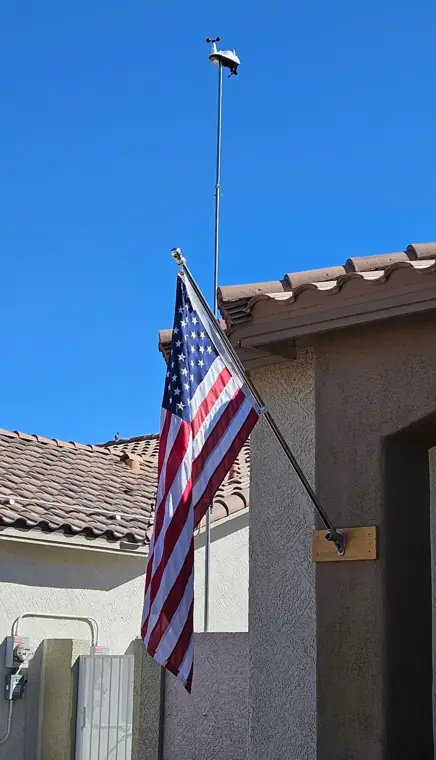
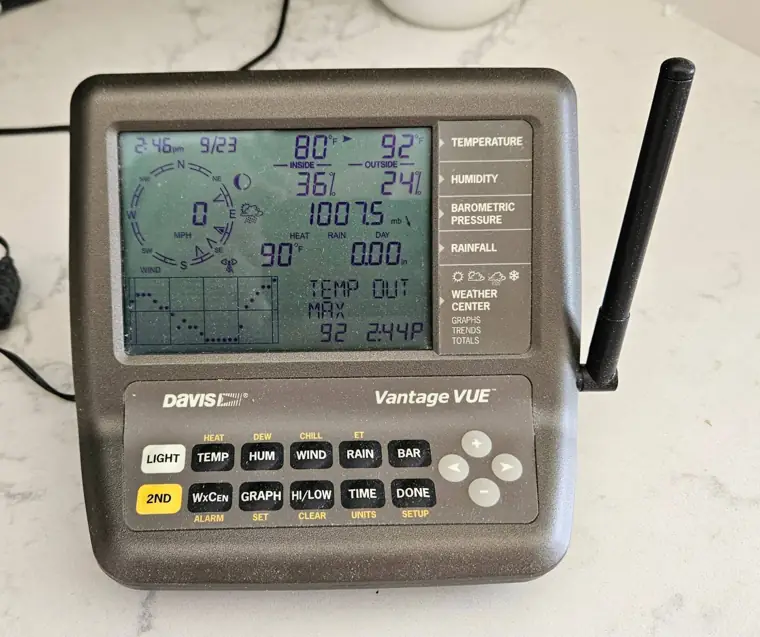
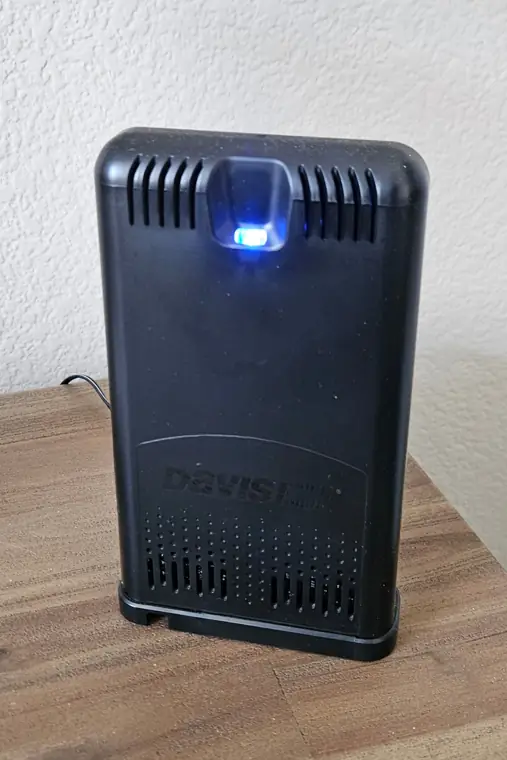
The live weather and records on this site come from a Davis Vantage Vue mounted on a mast about 25 feet above the ground. It reports wirelessly to a Vantage Vue console inside the house and to a WeatherLink Live receiver, which sends the readings to WeatherLink every minute. The station has been running here since June 2021.
The ADS-B receiver
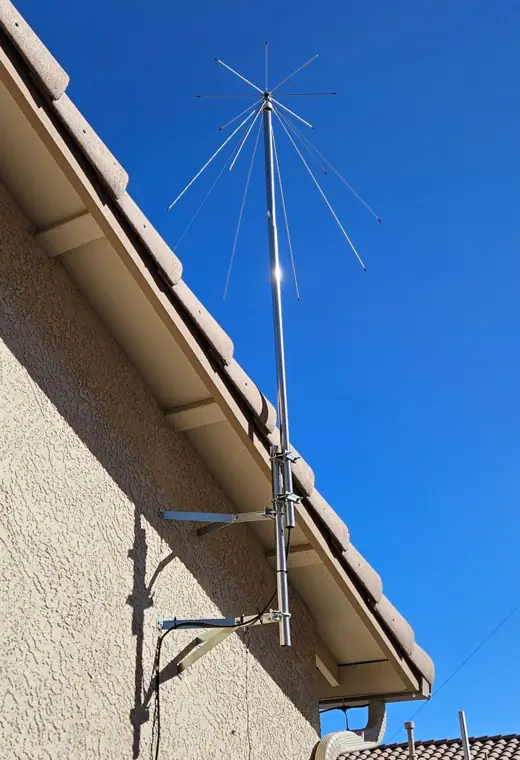
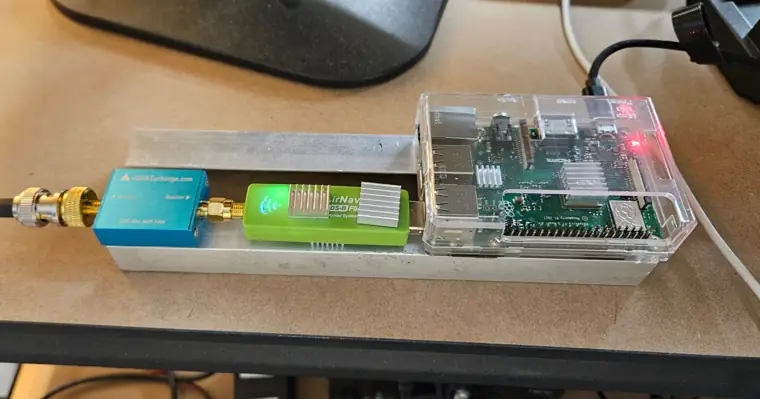
Aircraft broadcast their position, altitude and speed on 1090 MHz (ADS-B). This station picks those signals up and shares them with ADS-B Exchange and with the live aircraft map on this site. The signal path:
- Tram 1420 discone antenna, wall-mounted on a mast above the roofline
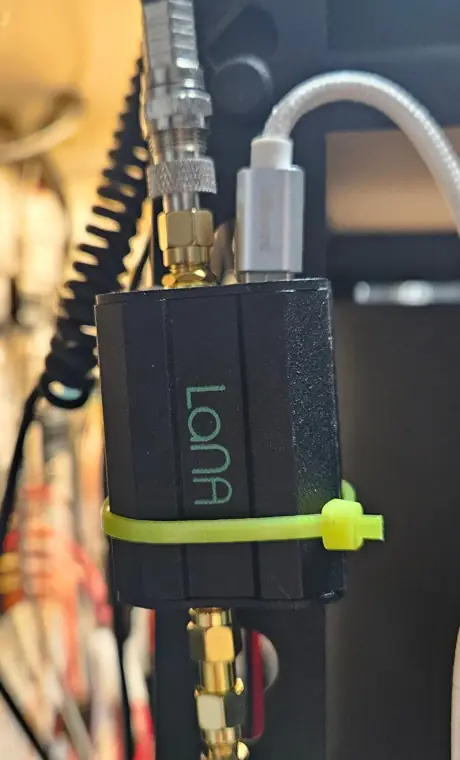
- Nooelec LaNA low-noise amplifier (20–4000 MHz)
- 1090 MHz SAW filter to keep out strong signals on other frequencies
- AirNav Radar FlightStick receiver, plugged into a Raspberry Pi 3B+ running the ADS-B Exchange feeder software
You can also see everything this receiver hears, with flight history and replay, on my ADS-B Exchange feeder map.
The APRS station
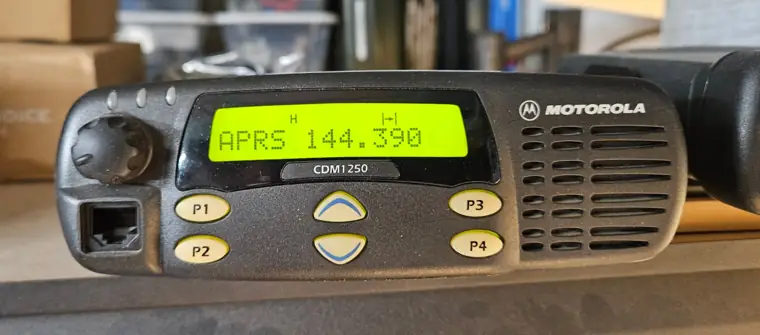
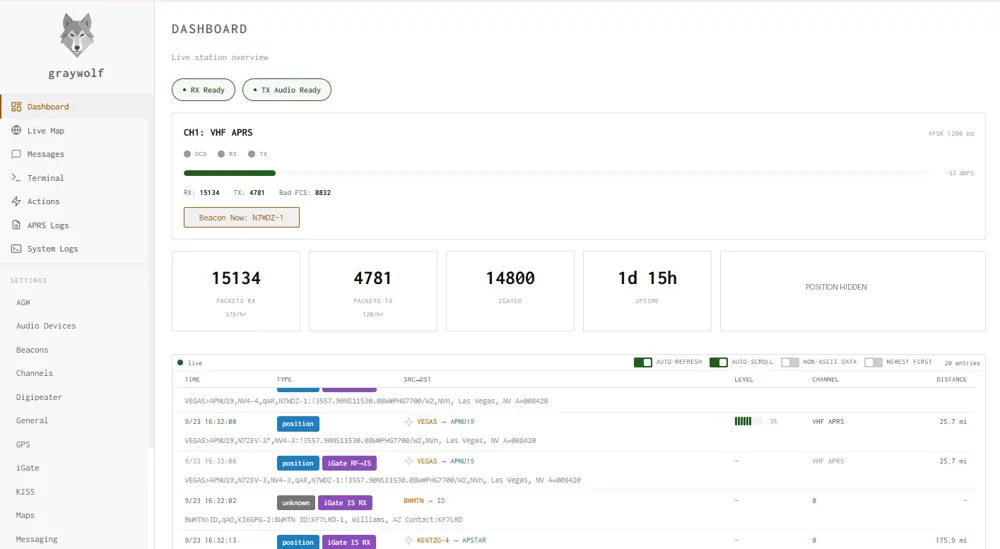
N7WDZ-1 is an APRS iGate and digipeater on 144.390 MHz. It repeats nearby stations' packets on the air to extend their range, and passes everything it hears to the APRS internet network (APRS-IS), where it shows up on sites like aprs.fi. The APRS page shows what it is hearing right now.
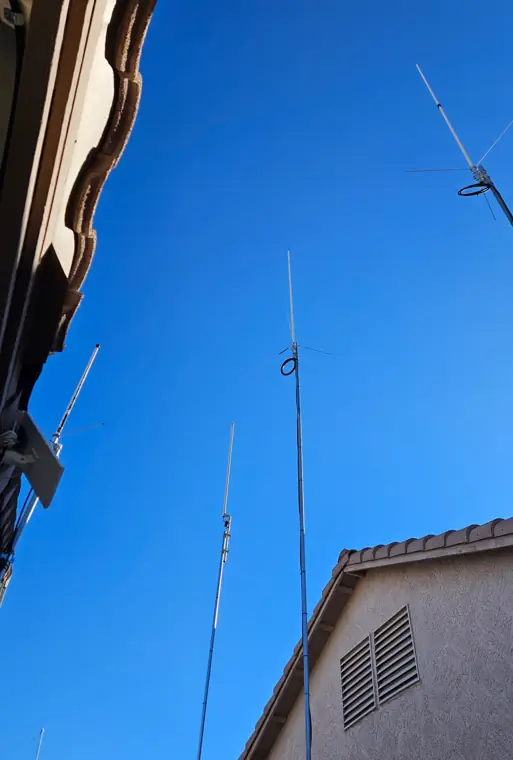
- Comet GP3 dual-band antenna, about 25 feet above the ground
- Motorola CDM1250 VHF transceiver on 144.390 MHz
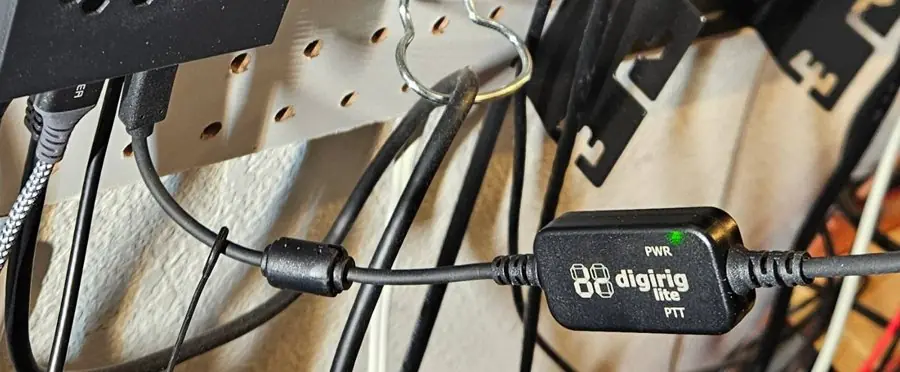
- Digirig Lite audio and PTT interface
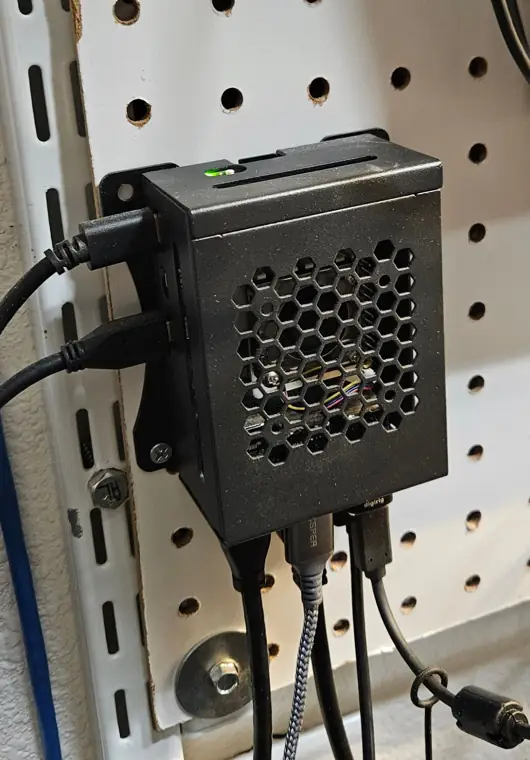
- Raspberry Pi 5 in a metal case, running Graywolf APRS software as the modem, digipeater and iGate
The LoRa APRS station
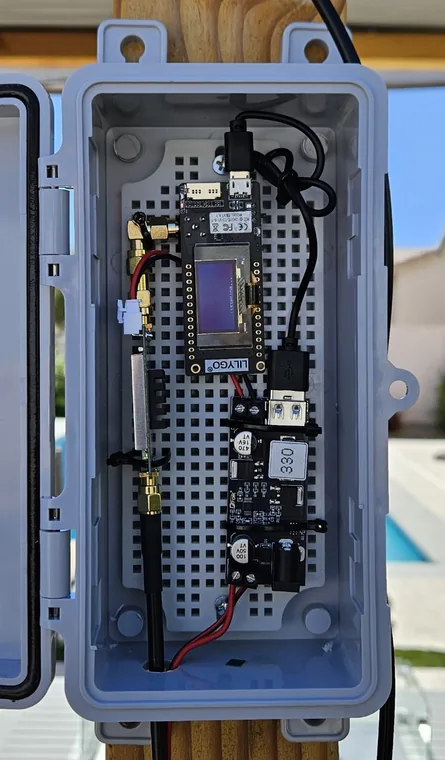
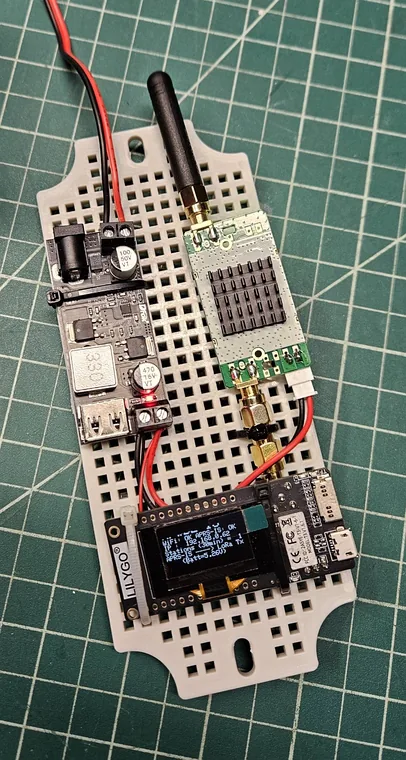
N7WDZ-25 is a second, much smaller APRS iGate and digipeater for LoRa APRS on the 433 MHz (70 cm) band. LoRa is a long-range, low-power radio mode, and inexpensive LoRa trackers use it to send APRS positions. N7WDZ-25 passes what it hears to APRS-IS and repeats local stations on the air. It sits in a weatherproof box on a patio post, runs on 5 volts from a 12-volt solar power system, and connects over Wi-Fi. Its stations and their signal strengths are on the APRS page.
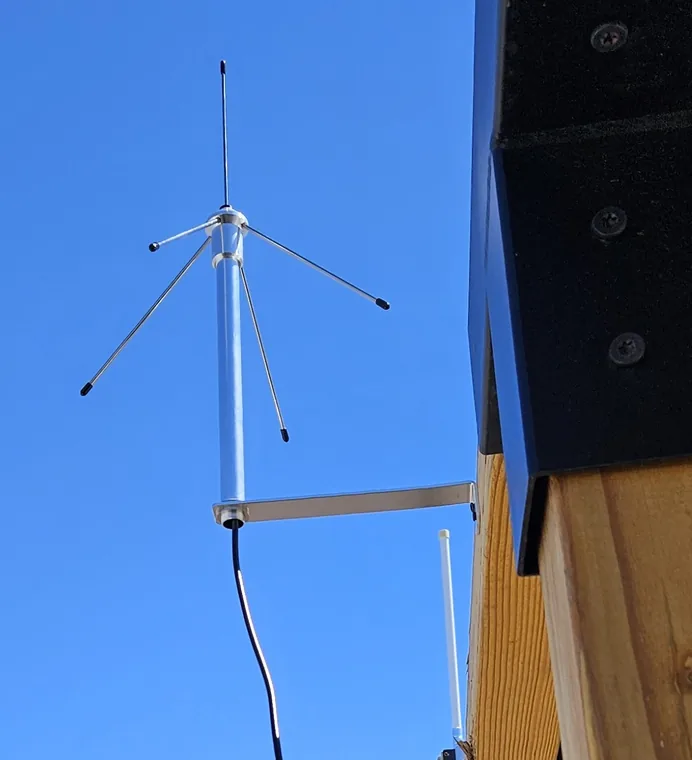
- HYS 433 MHz ground-plane antenna (3 dBi), on a bracket at the top of the patio cover, about 15 feet above the ground
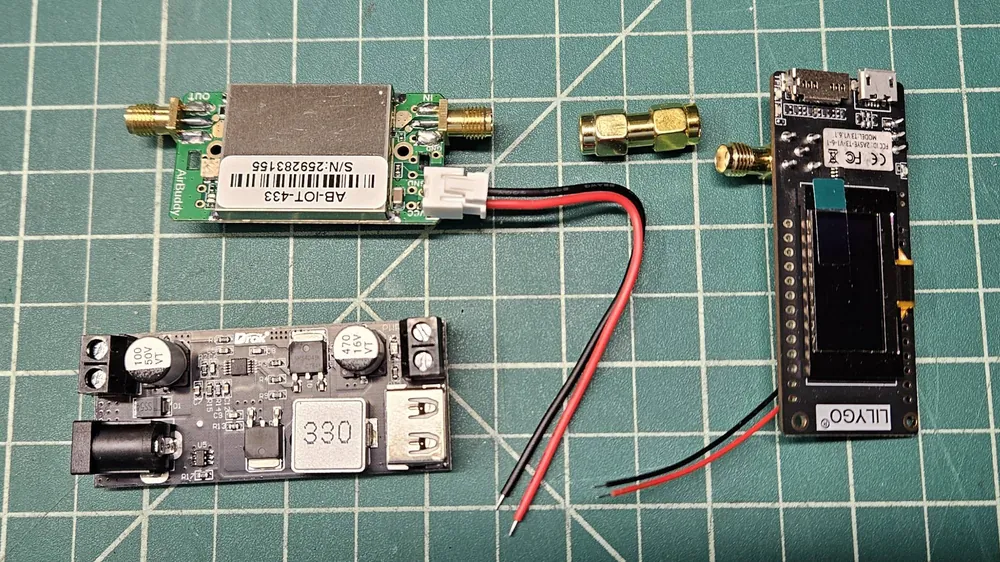
- AirBuddy AB-IOT-433 two-way LoRa booster: about 11 dB of receive gain with a low-noise front end, and up to about 2 watts of transmit power on 5 volts
- LILYGO LoRa32 (TTGO T3 v1.6.1 / v2.1) 433 MHz ESP32 board running the CA2RXU LoRa APRS iGate firmware
- DROK buck converter stepping the 12-volt solar supply down to 5 volts for the board and booster
73,
Gene, N7WDZ