
Vacuum Fluorescent Display Repair
A two-line display module from 1986 with a bent-up stack of pins, new pin headers, and a lot of soldering.
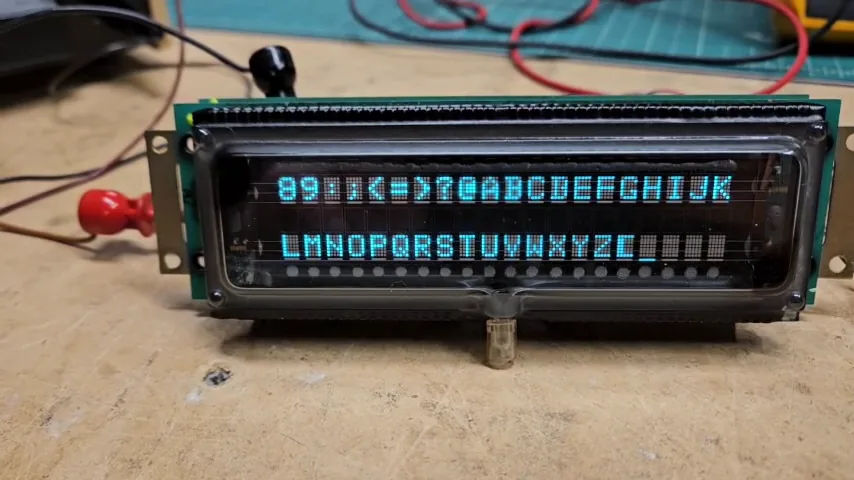
Alphanumeric vacuum fluorescent displays, or VFDs for short, were used everywhere in the 1980s and 90s. A VFD is a flat glass vacuum tube. Its characters are made of small dots or segments that glow blue-green when they are switched on.
In the winter of 2026 I acquired a couple of old ones, and one of them was somewhat damaged. This is how I got it working again.
1. The display
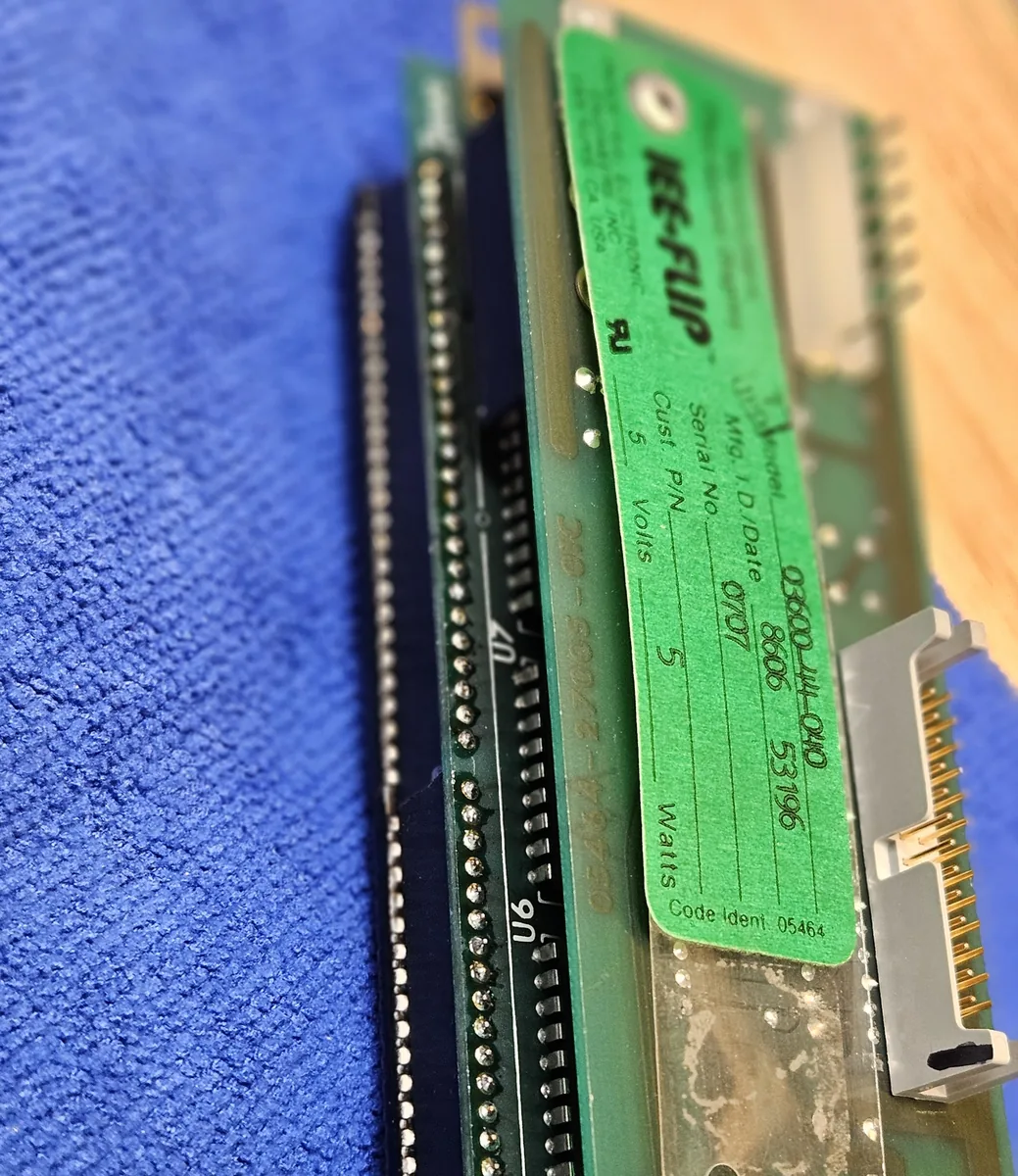
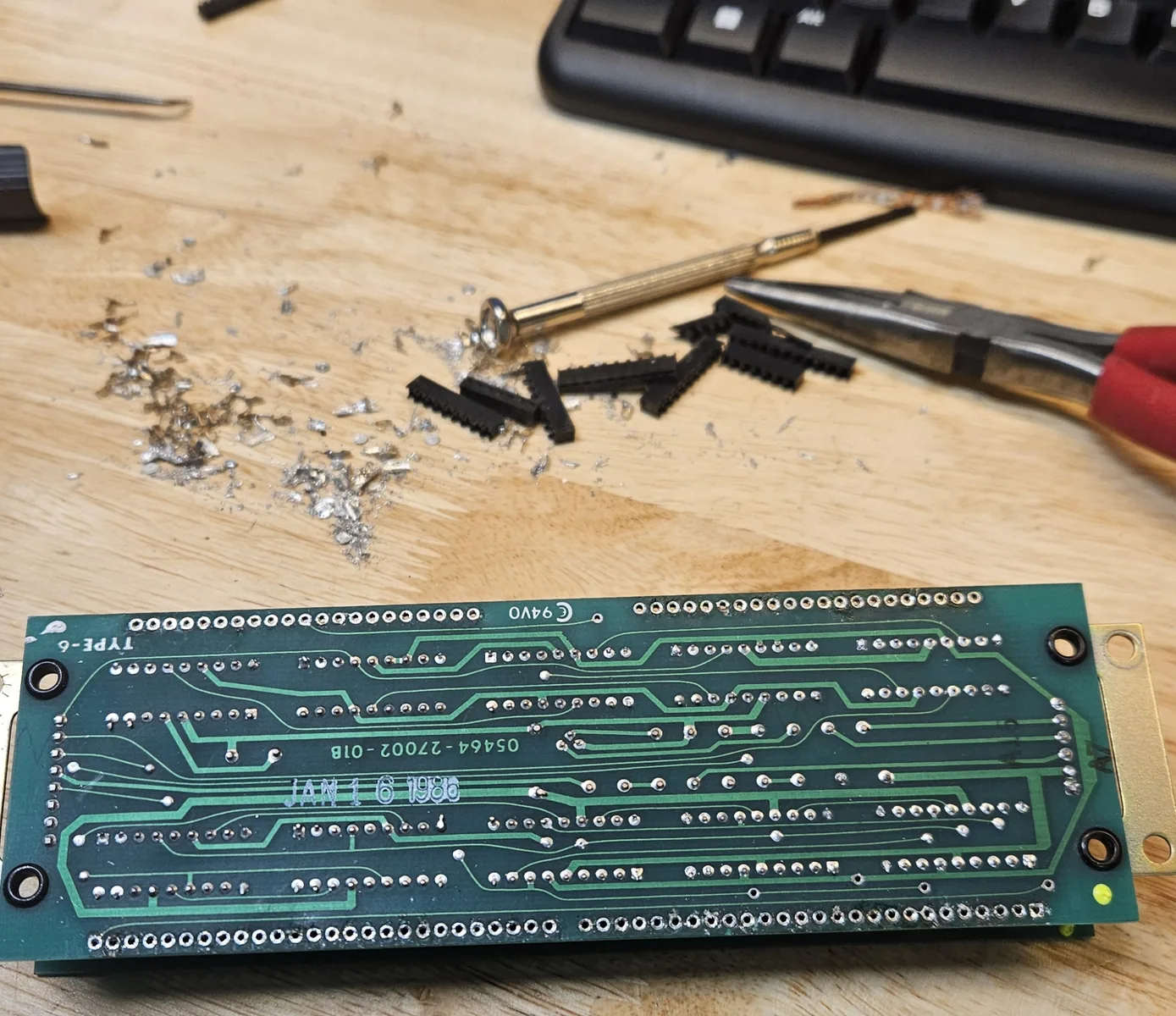
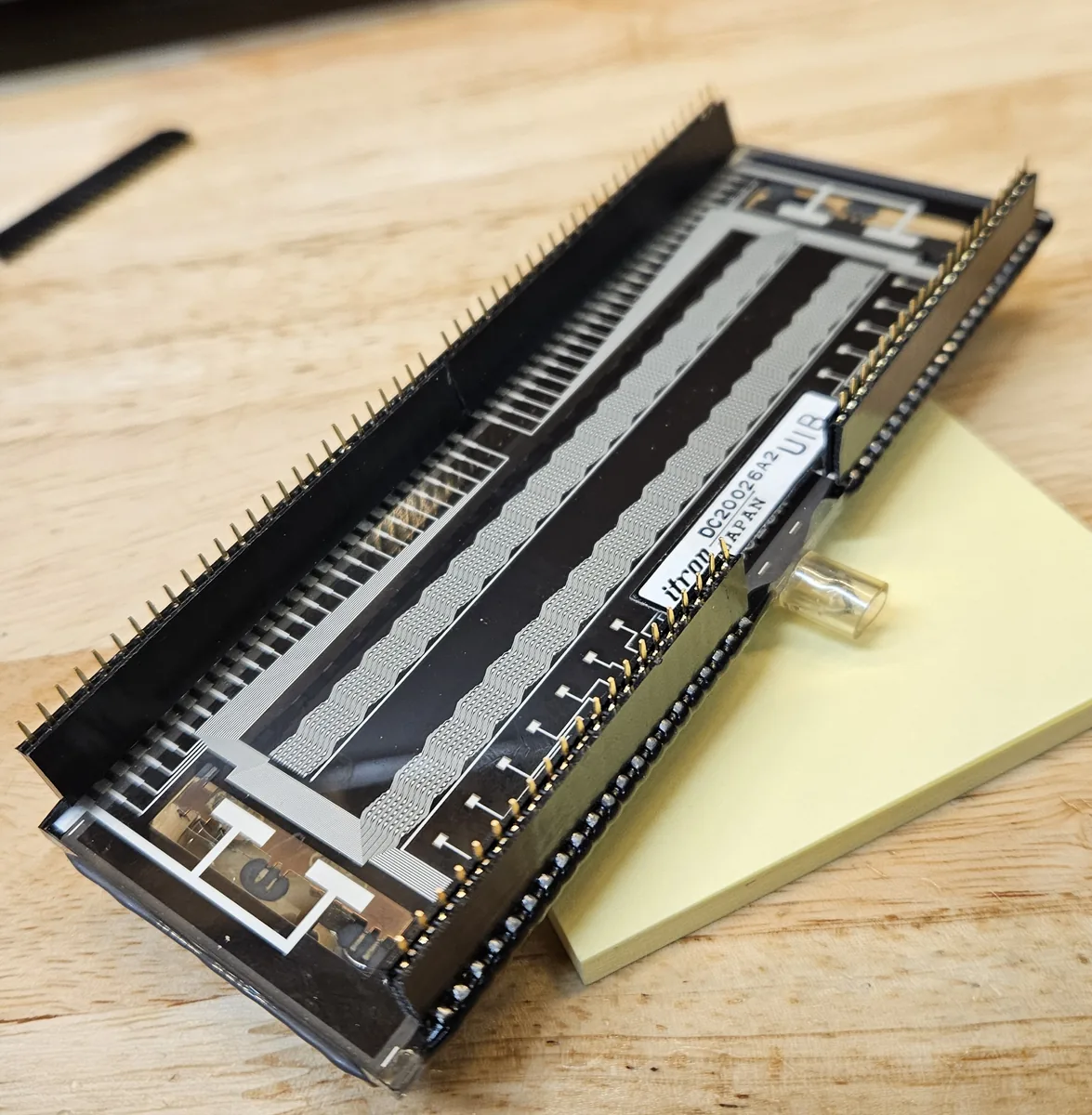
The module is an IEE FLIP, model 03600-44-040, made by Industrial Electronic Engineers in California. One of its boards is stamped JAN 16 1986. The glass tube on top is an itron DC20026A2, made in Japan. Each character is a grid of dots 5 wide and 7 high. The module runs from a single 5 volt supply and makes the higher voltage the tube needs on its own board.
2. The damage
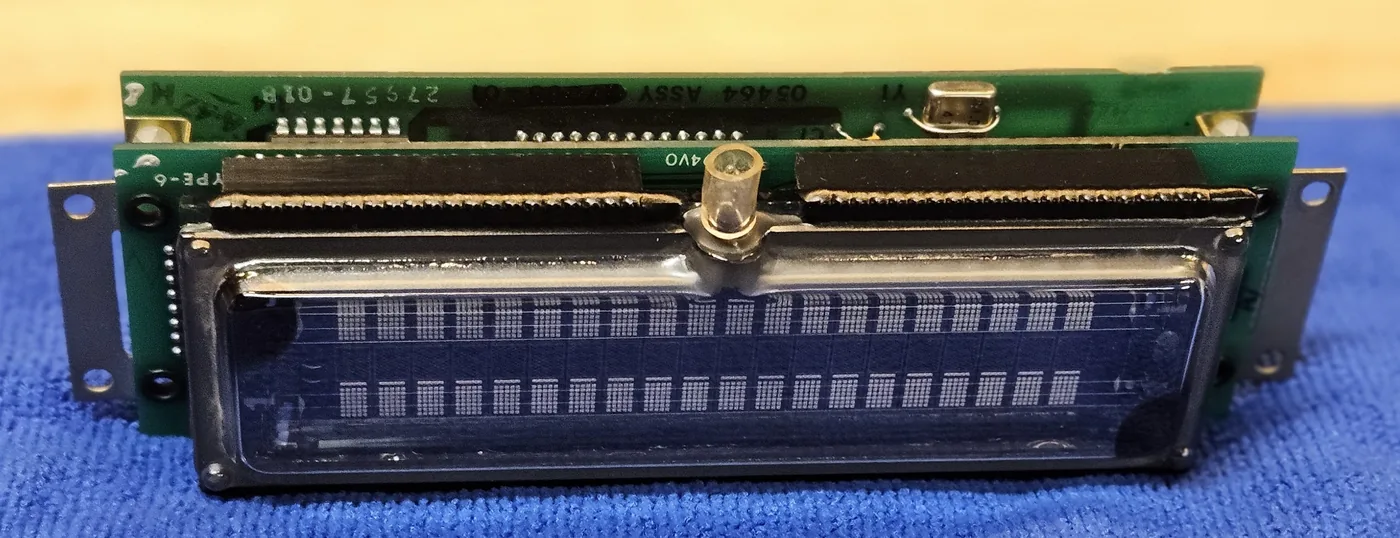
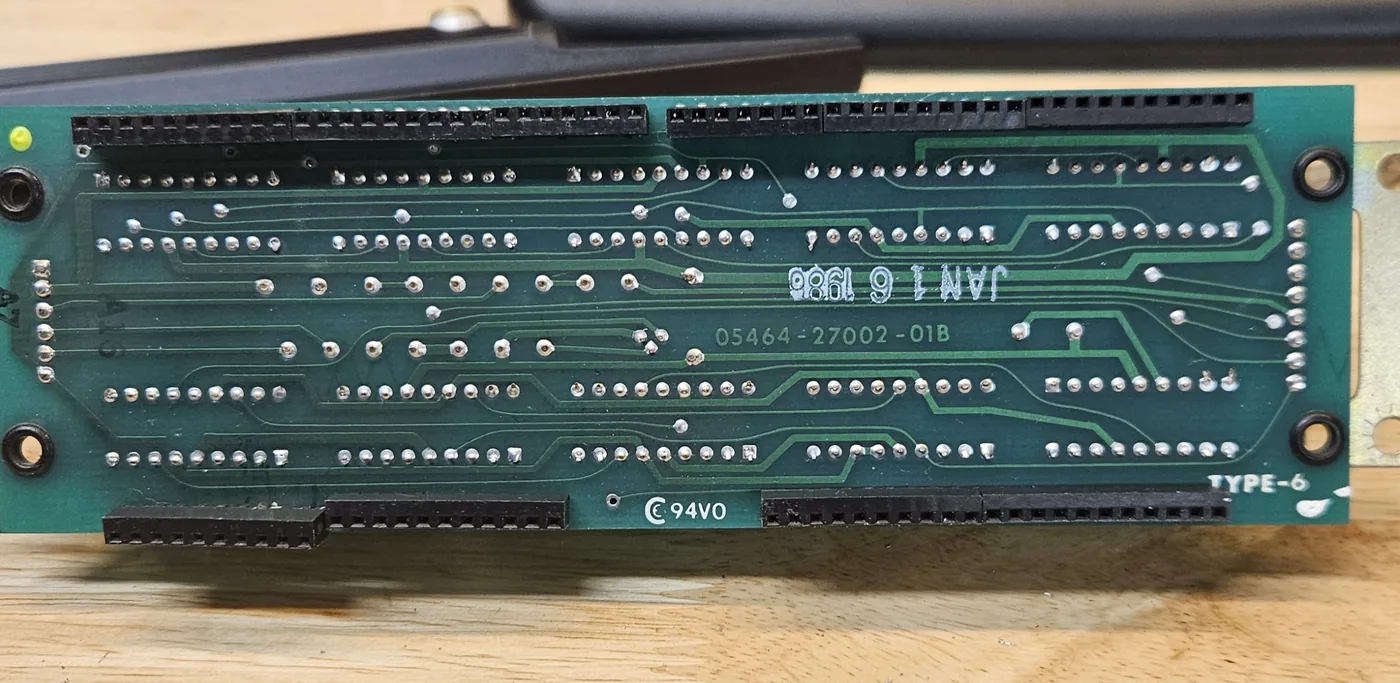
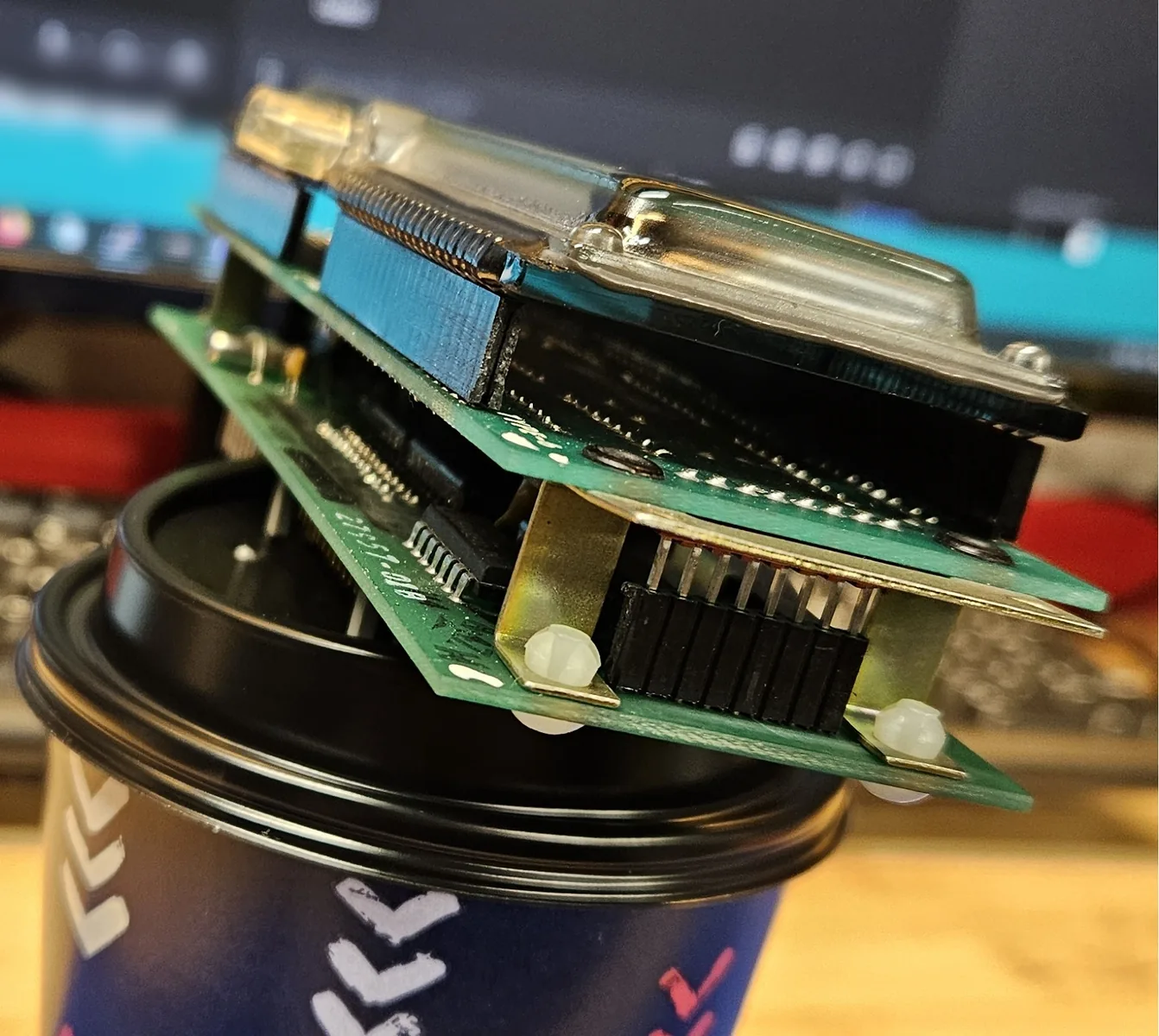
The module is a double stack of PC boards with the VFD stacked on top of that. The stack was badly misaligned. The pins of the VFD were crooked and the pin headers they plug into were badly bent.
3. New headers
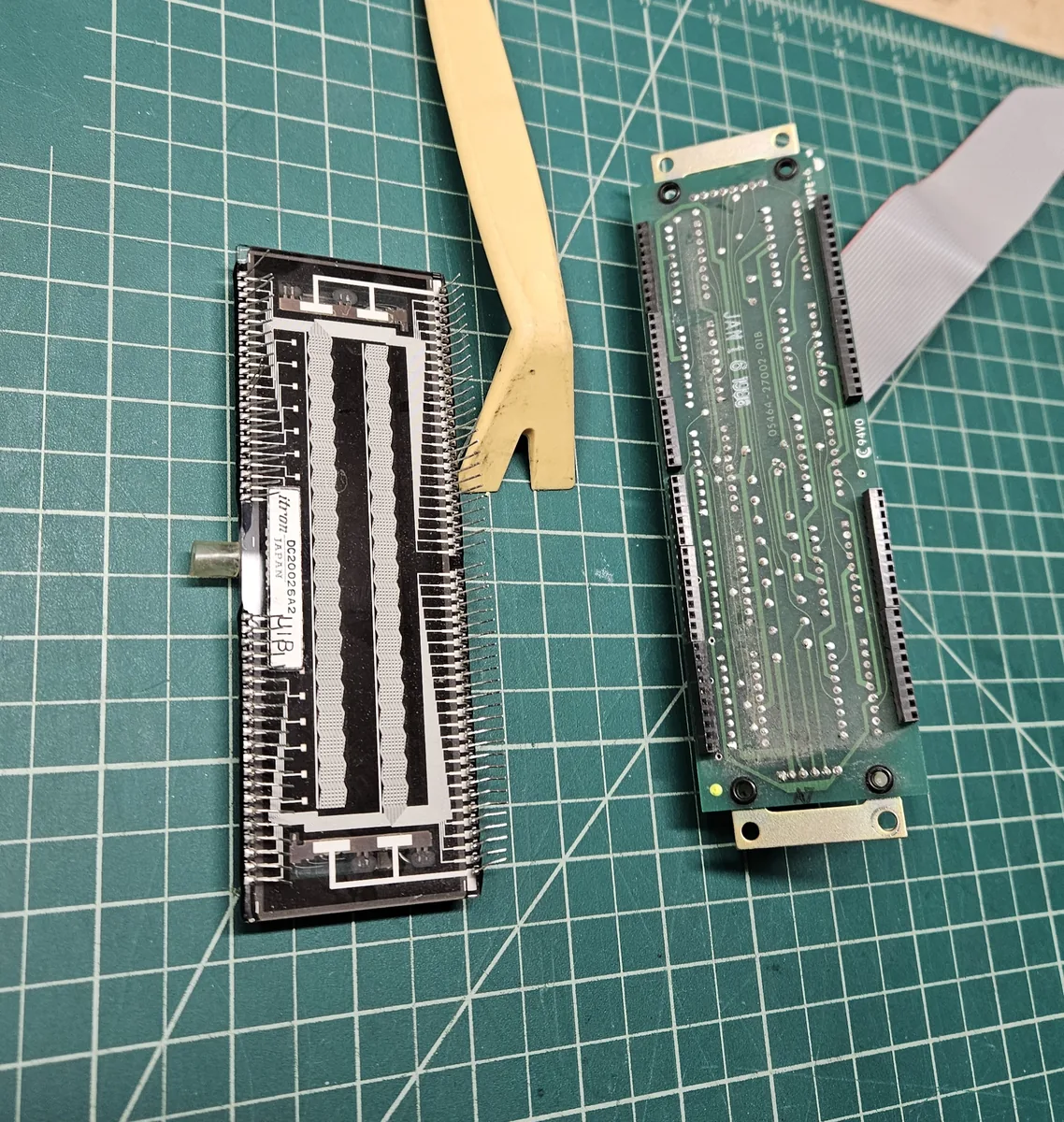
I straightened the pins and the headers as best I could, but it was close to impossible to line up all of the pins at once to get them back into the headers.
So I decided it was easier to remove the old pin headers, plug the VFD into new headers, and then plug that whole assembly into the board. Then came soldering many, many pins.
4. Testing
I applied 5 volts and jumpered the module into test mode. It steps through its whole character set across both lines.
5. A single line version
Here is a single line version of a VFD in test mode on my bench. On this one each character is built from segments instead of dots.
About these displays
These VFDs are getting harder and harder to come by. I'm not sure, but I believe these were salvaged, perhaps out of some gaming machines. Used ones in the two-line version are selling for upwards of $400.
Peter, KF7PSM, pointed out what is cool about these old modules. They could be wired straight onto a computer's parallel bus at an address of their own, so the processor could reach the display like any other device on the bus. In that mode the processor can also read back what is on the display, so it acts like display memory. The modules accept serial data as well, but only one way, for writing.
Parts
- IEE FLIP vacuum fluorescent display module, model 03600-44-040, two lines of 20 characters
- Display tube: itron DC20026A2
- New pin headers to replace the bent ones
- A 5 volt supply for testing