LoRa APRS iGate
N7WDZ-25: a small solar-powered LoRa APRS iGate and digipeater on the 433 MHz (70 cm) band
LoRa is a long-range, very low-power radio mode, and LoRa APRS uses it to carry ordinary APRS packets. Small, inexpensive LoRa trackers send their positions on 433 MHz, and an iGate like this one listens for them and passes them to the APRS internet network (APRS-IS), where they show up on maps like aprs.fi. N7WDZ-25 also works as a digipeater, repeating local stations on the air to extend their range.
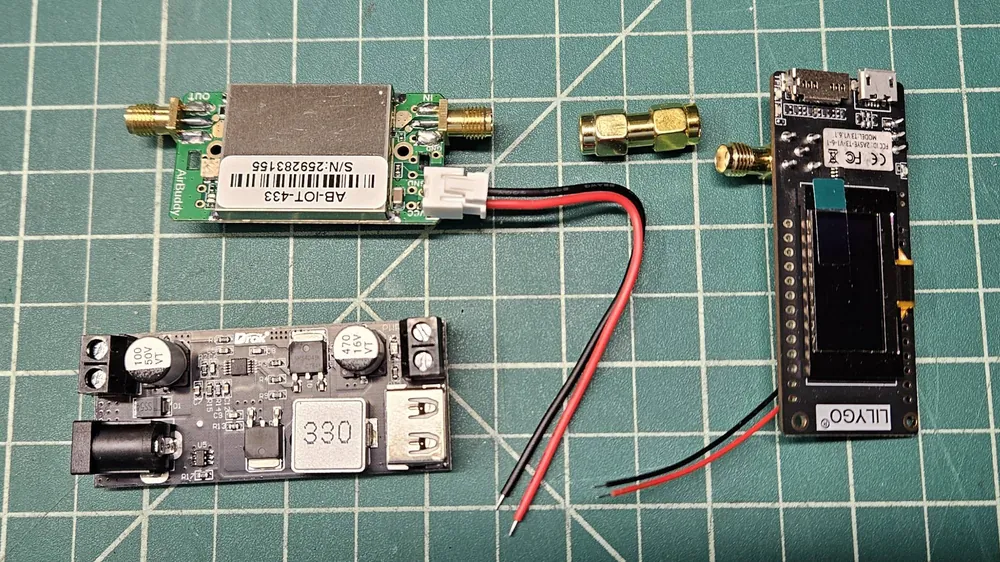
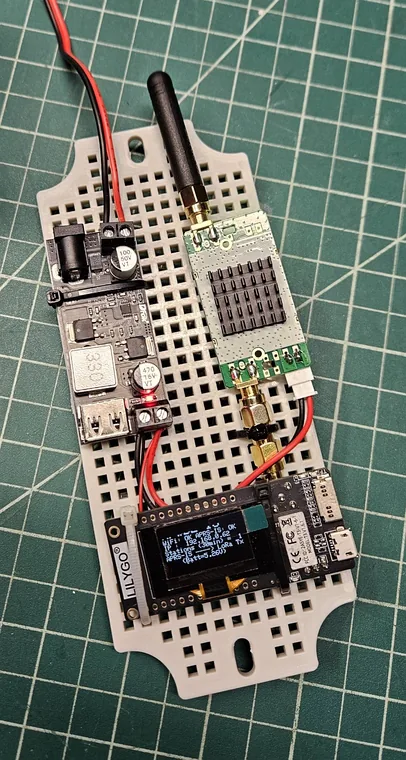
The heart of it is a LILYGO LoRa32, an ESP32 board with a 433 MHz LoRa radio and a small OLED screen, running the free CA2RXU LoRa APRS iGate firmware. The firmware has a web page for setup and connects to the internet over the house Wi-Fi. A two-way booster between the board and the antenna strengthens both the signals it hears and the ones it sends. The whole station runs on a 12-volt solar power system, stepped down to 5 volts by a buck converter.
Parts
- LILYGO LoRa32 T3 v1.6.1 (also called TTGO LoRa32 v2.1), 433 MHz, ESP32 with OLED screen
- AirBuddy AB-IOT-433 two-way LoRa booster: about 11 dB receive gain, up to about 2 watts transmit on 5 volts
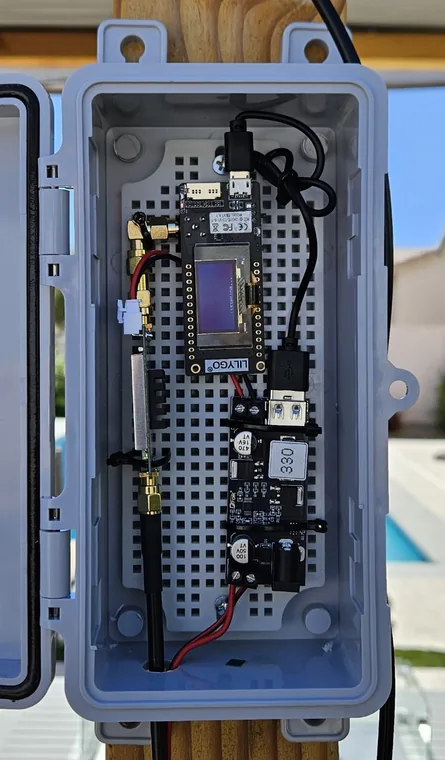
- HYS 433 MHz ground-plane antenna (3 dBi), about 15 feet up on a bracket at the top of the patio cover
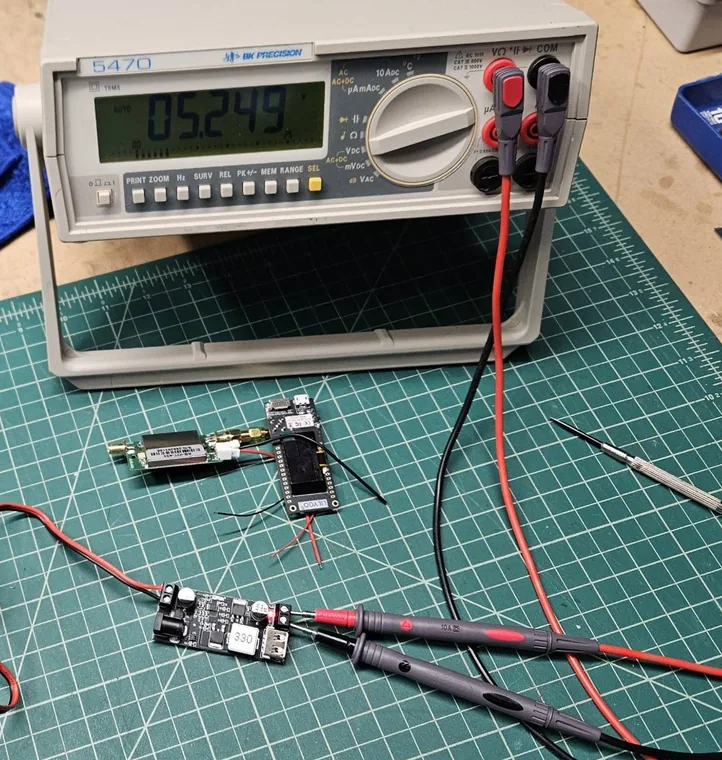
- DROK buck converter, 9–36 volts in, set to 5.25 volts out, powering both the board and the booster
- Weatherproof enclosure with a mounting plate, on a patio post
Links
Credits
The LoRa APRS iGate firmware is by Ricardo Guzman, CA2RXU, and is free and open source.